
The probate process can be quite complex and requires some familiarity with various legal terminologies, deadlines, the filing process, and much more. While navigating this procedure, especially for the first time, it can be easy for things to fall through the cracks, but in probate, even a minor mistake in the process could lead to extensive delays, costing you time, effort, and money. If you are about to get involved in legal processes after the passing of a loved one, it will be helpful if you are able to identify common mistakes to avoid in Texas probate.
This guide helps individuals involved in Texas probate understand the procedural requirements and common errors that can delay estate administration or create legal complications.
Summary of Common Texas Probate MistakesTexas probate involves specific procedures for validating wills, identifying assets, addressing debts and taxes, and distributing estate property. Common errors include missing statutory deadlines, overlooking assets, misclassifying community or separate property, failing to address creditor obligations, and creating communication gaps with beneficiaries. Executors must also distinguish probate from non-probate assets and follow applicable requirements when making distributions. Understanding these responsibilities can help reduce delays, disputes, and administrative complications. |
Understanding the Probate Process in Texas
The Texas Estates Code governs probate laws in the state. It provides the groundwork to follow for the probate process, which is the legal procedure used to distribute a deceased individual’s property. This process involves validating the will, settling debts, and transferring remaining assets to heirs with court approval. (Tex. Est. Code Sec. 31.001). Texas offers various probate methods.
The most formal process is estate administration, which appoints someone to oversee the entire process, a Personal Representative or Independent Executor. Probate may be required to transfer property, pay off debts, identify heirs, or settle disputes. However, non-probate property, such as certain bank accounts and life insurance proceeds (Sec. 111.054), can bypass probate and go directly to beneficiaries, and for smaller estates, typically $75,000 or less, faster and less formal probate methods may be used, allowing heirs to collect assets directly with a court order (Sec. 205.001).
Whether probate is necessary depends on factors like estate size and complexity, and the need for an attorney varies based on the probate method and court requirements.
Common Mistakes to Avoid in Texas Probate
Not Keeping Up with Deadlines
The probate procedure can be an arduous one, with deadlines beginning to run the day of the decedent’s death. In Texas, a will must be filed within four years of the loved one’s passing. (Sec. 256.151). In the event a person fails to file the will in a timely fashion, the will may be deemed invalid, and the estate then may be distributed according to the laws of intestacy. (Sec. 256.003). This distribution may not align with the wishes of the decedent.
Once a will is filed with the court, various other deadlines will come up. Some deadlines may be easier to keep track of than others, like the date of a court hearing. However, the executor is responsible for quite a few things, including issuing and serving citations, typically accomplished by posting at the courthouse for 10 days before the return date, which is the first Monday after the expiration of the 10 days. (Sec. 51.053). The court will also require an inventory to be prepared and filed before the 91st day after the date the personal representative qualifies. (309.051). When deadlines are described in such a way, they can be difficult to keep track of, but there is no need to navigate the process alone. A probate attorney can follow the deadlines and ensure to follow the wishes of the deceased by keeping up with the deadlines for you.
Overlooking Some Estate Assets
An executor should be very familiar with the estate, as they are required to file an inventory listing all of the property owned by the decedent. (Sec. 309.051). The inventory may include real estate, bank accounts, investments, personal property, and any other valuables the decedent possessed (Sec. 309.051). This property should also be identified as being community property, separate property, or, if any of the property is jointly owned with another person or persons, as the ownership of the property may affect the way it is distributed. (Sec. 309.052). Overlooking assets can lead to an incomplete estate distribution and potential legal challenges from beneficiaries, while failure to complete an inventory list at all may result in a fine for the executor as well as liability for any damages and costs sustained by overlooking the assets. (Sec. 309.057).
Misunderstanding Community Property Laws
When preparing an inventory, an important requirement is identifying whether the estate property is separate or community property. (Tex. Est. Code § 309.051). One way to make a major probate mistake in Texas is not completely understanding the assets’ ownership. Texas is a community property state, meaning that assets acquired during a marriage are generally considered jointly owned by both spouses. (Tex. Fam. Code Sec. 3.003). Sometimes, this makes it difficult for executors to evaluate which property(ies) and assets are only associated with the deceased person and how to distribute all of the property properly.
A will typically lists specific items to be inherited, but largely these items can be phrased as “all of my separate property” or “all of my interest in community property.” Incorrect classification of community and separate property in the inventory can oftentimes lead to incorrect distributions and, ultimately, disputes among heirs. Incorrect classification of community and separate property can lead to incorrect distributions and disputes among heirs.
Avoiding Debts and Taxes Payment
Before distributing assets to beneficiaries, the estate must settle all outstanding debts and taxes (Sec. 101.051). Without these payments, the heirs will not be able to claim any assets and the estate will not be able to be closed. (Sec. 405.004). Moreover, executors who fail to pay creditors or tax obligations can be held personally liable. (Sec. 351.003). This includes not only final income taxes for the decedent but also any estate taxes and debts owed by the estate (Sec. 124.010).
Communication Gaps Among Beneficiaries
In most cases, neglecting communication with beneficiaries leads to misunderstandings, mistrust, and disputes. Because the executor has authority over the estate, they are able to do things like possess the estate (Sec. 101.003) and distribute property not specifically devised (Sec. 405.0015). With power like that, it is possible to raise concerns with beneficiaries in the event they are not kept updated on the process. Thus, executors should maintain open and transparent communication with all parties involved, providing updates on the probate process and responding to inquiries on time. This cooperation and knowledge of the ongoing process will prevent potential conflicts and enable a smoother probate process.
Improperly Distributing Assets
Distribution of assets is arguably the most important part of the probate process. When the executor does not properly distribute assets due to neglect, distributes assets before settling debts and taxes, or distributes assets without proper authorization from the probate court, this can bring legal consequences for the beneficiaries and the executor (Sec. 360.301). You must follow the legal process and court orders before distributing assets to ensure compliance with the decedent’s will and state laws.
Ignoring Non-Probate Assets
Some assets, such as life insurance policies, retirement accounts, and assets held in a trust, pass directly to designated beneficiaries and are not subject to probate (Sec. 111.052). These are called non-probate assets. Executors should be aware of these non-probate assets to avoid mismanagement and ensure proper transfer to beneficiaries.
Not Seeking Professional Guidance
Probate can be legally and financially complex, and executors who attempt the process without professional help may make costly errors. Seeking guidance from experienced probate attorneys, financial advisors, and accountants can help ensure the estate is administered correctly and efficiently. For instance, consulting a probate attorney in San Antonio ensures the estate administration aligns with Bexar County probate court procedures and local probate rules.
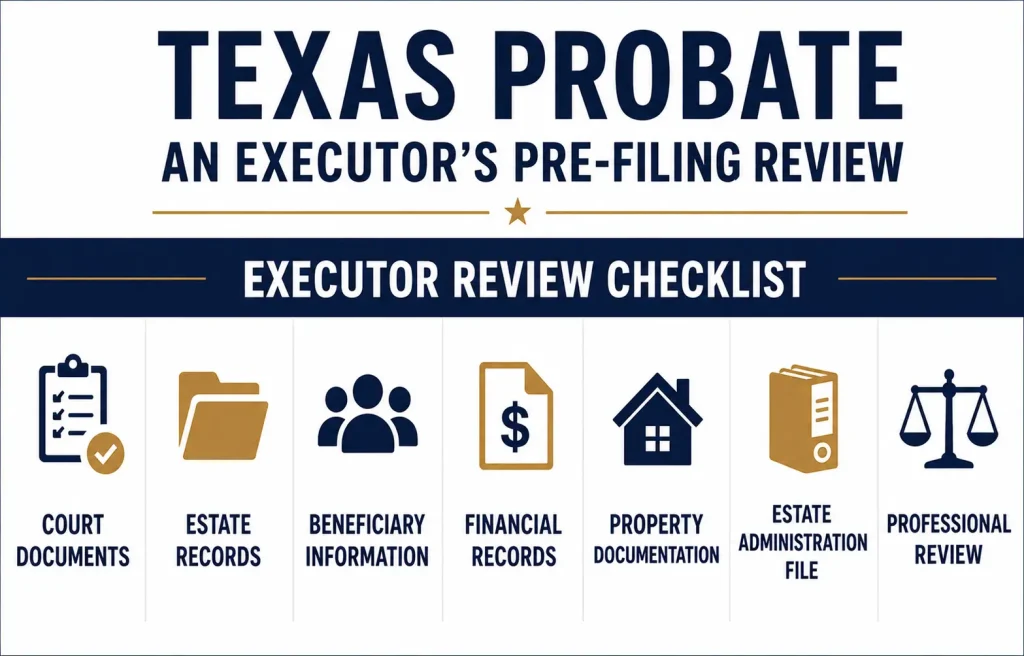
Texas Probate: An Executor’s Pre-Filing Review
Here’s a helpful infographic that summarizes key phases of the executor’s pre-filing review:
Conclusion
Knowing these common mistakes in Texas probate will help you navigate the probate process. To ensure that the process is less complicated, consider hiring an estate planning and probate attorney to guide you through the process.
If you are about to go through this process and want to consult a professional probate attorney in San Antonio, New Braunfels, or Comanche, Texas, we invite you to contact one of our outstanding attorneys at MBB to handle everything for you!
Frequently Asked Questions About Common Mistakes In Texas Probate
What happens if someone dies without a will in Texas?
The estate is generally distributed under Texas intestacy laws based on the decedent’s surviving relatives and applicable inheritance rules.
Can an executor correct an error discovered during probate?
Depending on the nature of the error, correction may require additional documentation, amended filings, court action, or other procedures under Texas law.
Why should executors keep separate records for estate transactions?
Separate records create a clear financial trail showing how estate funds were received, spent, transferred, or otherwise handled during administration.

ABOUT THE AUTHOR
Vanessa Garza
Vanessa Garza is an Associate Attorney at Mazurek, Belden & Burke, P.C. She earned her B.A. in Communication Studies from The University of Texas–Pan American and her J.D. from The University of Texas School of Law. Admitted to the Texas Bar in 2022, Vanessa previously worked with the United States Attorney’s Office before joining the firm in 2026.